
February 2026
I. The Diplomatic Incident
On 23 December 2025 — while most of Europe was buying last-minute Christmas presents — the United States Secretary of State quietly imposed visa bans on five European citizens. Their crime was not espionage. It was not terrorism. It was helping to write a law about how social media platforms should handle disinformation.
Among the banned: Thierry Breton, the former European Commissioner who had architected the Digital Services Act. Josephine Ballon and Anna-Lena von Hodenberg, German NGO workers. Clare Melford, head of the Global Disinformation Index. Imran Ahmed, who runs the Center for Countering Digital Hate. Five people, barred from entering the United States, because they participated in the democratic process of a sovereign continent.
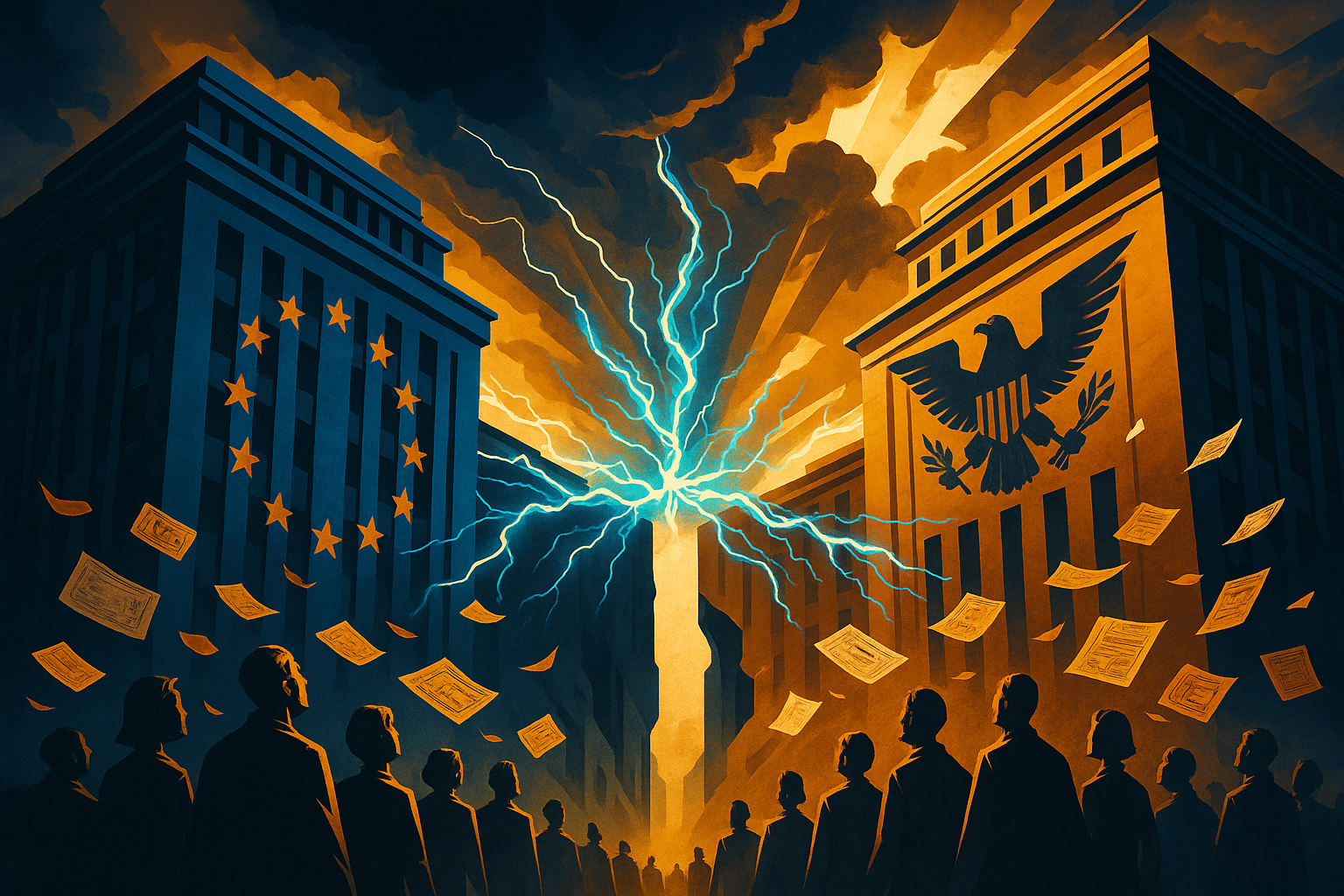
Emmanuel Macron called it “coercion aimed at undermining European digital sovereignty.” The European Commission issued a terse statement about respecting the rule of law. And then, on 3 February 2026, the US House Judiciary Committee published a 160-page report titled, without a trace of irony: “The Foreign Censorship Threat, Part II” — documenting what it characterised as Europe’s decade-long campaign to censor the global internet.
The report calls European civil society organisations “censorious NGOs.” It frames the Digital Services Act — a law passed by a democratically elected parliament representing 450 million people — as a foreign weapon aimed at American free speech.
Welcome to 2026. The world’s two largest democratic blocs are no longer arguing about tariffs on steel. They are arguing about who gets to decide what you are allowed to read.
II. How We Got Here
To understand how we arrived here, it helps to zoom out — far out, past the specifics of any single regulation, to the architecture of the internet itself.
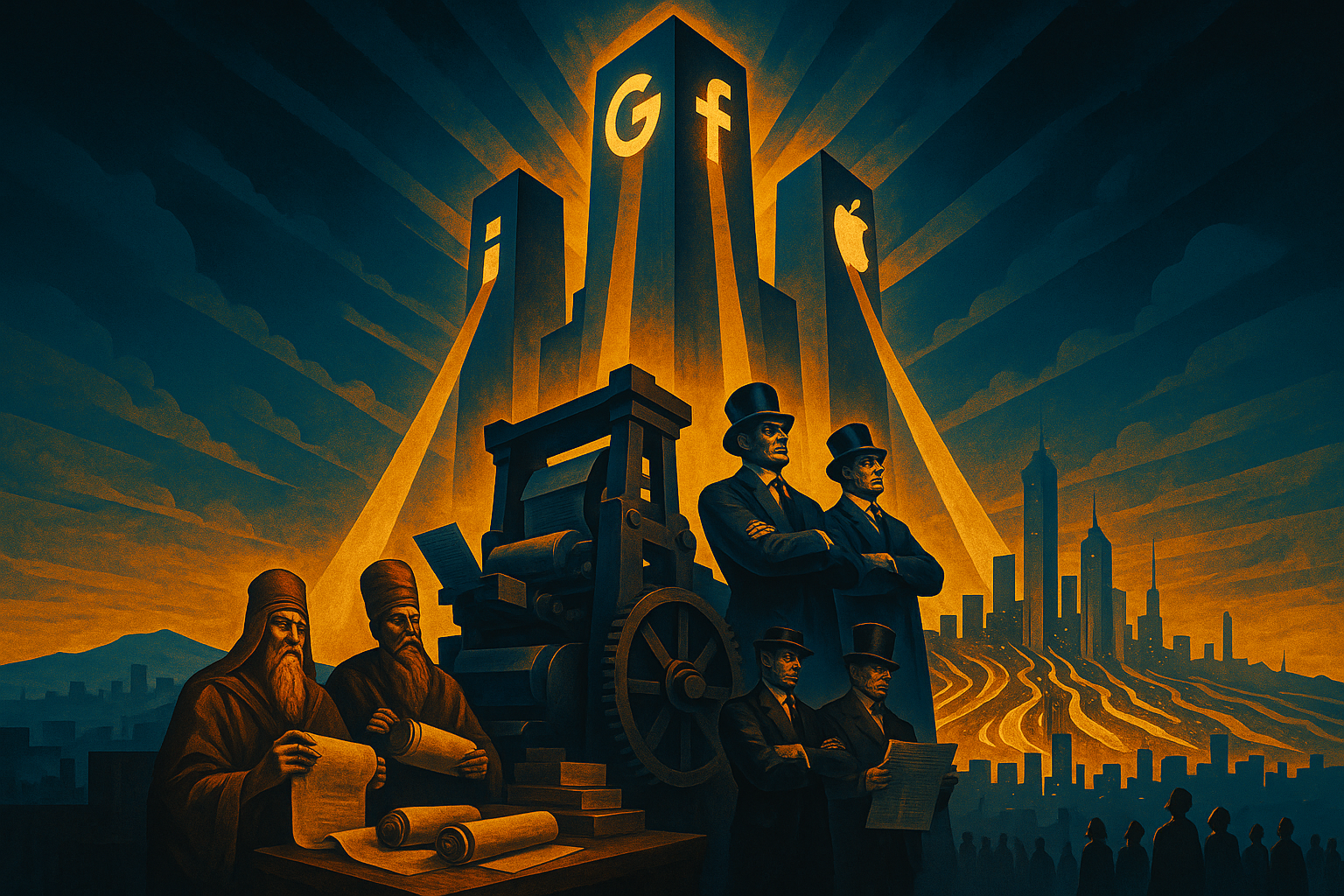
For most of human history, information was scarce and power belonged to those who controlled its production: the scribes, the priests, the printing press owners, the newspaper barons. The internet was supposed to change that. And it did — briefly. In the mid-2000s, the web genuinely felt like a commons. Anyone could publish. Anyone could read. The gatekeepers had lost their gates.
But then something happened that Yuval Harari might describe as evolution doing what evolution does: new gatekeepers emerged, far more powerful than the old ones. They didn’t control the printing presses — they controlled the attention. Google decided what you found. Facebook decided what your friends saw. Twitter decided what was trending. And because these companies were all American, headquartered in a single 50-mile strip of California coast, a peculiar situation arose: the public square of the entire world was governed by the corporate policies of a handful of Silicon Valley firms, operating under American law.
Europe noticed. And Europe, being Europe, wrote a regulation.
III. The Uncomfortable Truth
The Digital Services Act, which took full effect in 2024, is not a censorship law — no matter how many times the House Judiciary Committee says it is. At its core, it requires large platforms to be transparent: to explain how their algorithms work, to provide data to researchers, and to have clear processes for handling illegal content. It does not tell platforms what to say. It tells them to explain what they’re doing.
But here’s the uncomfortable truth that neither side of this argument wants to admit: both the American and European positions are exercises in centralised control.
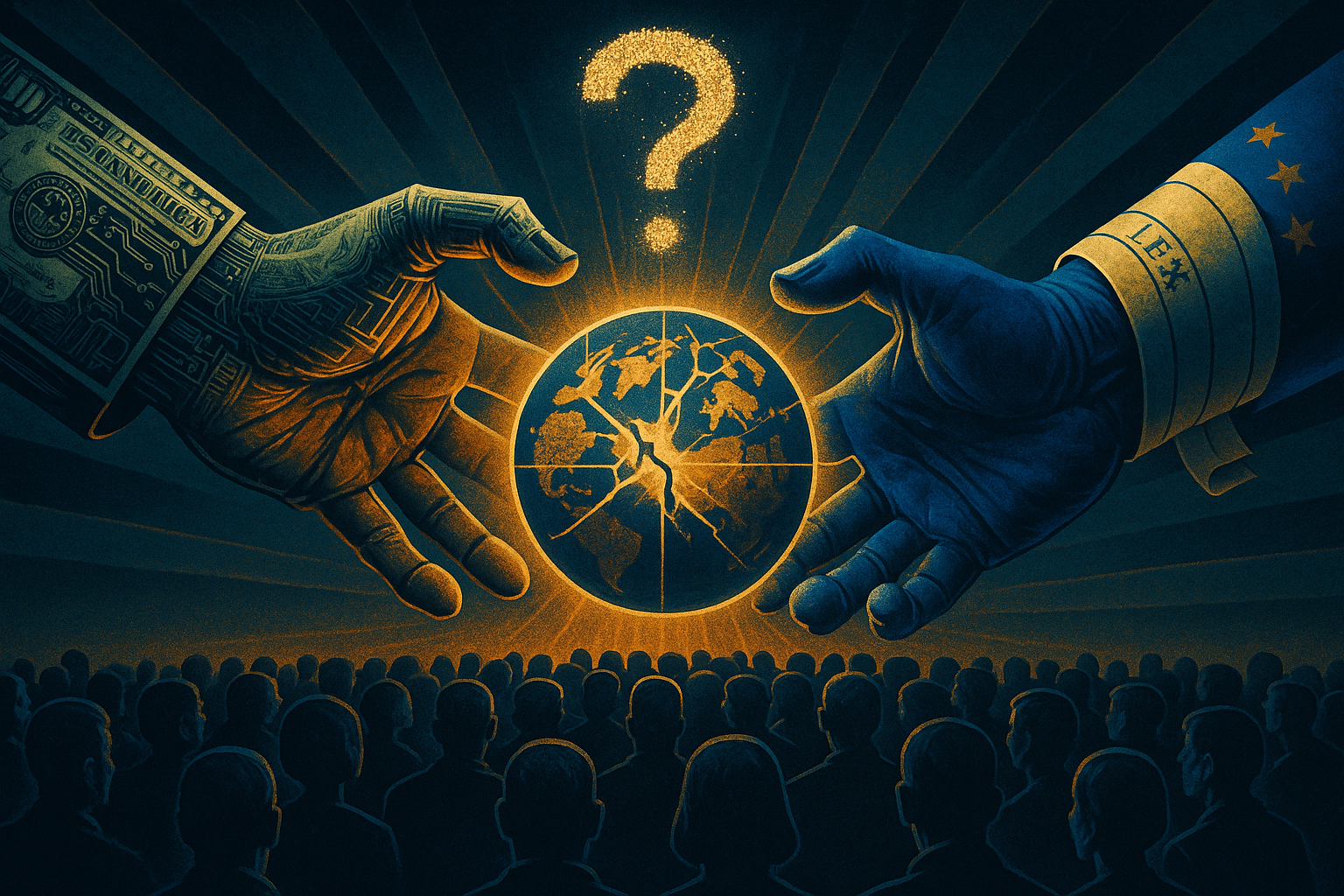
When the US government pressures Europe to drop the DSA, it is not defending free speech in the abstract. It is defending the right of American corporations to operate as unregulated intermediaries of global information. When the European Commission fines X for non-compliance, it is asserting that a continental bureaucracy should have oversight over the algorithms that shape public opinion. Both positions assume that someone — a government, a corporation, a regulator — must sit at the centre and decide.
Neither side is asking the question that actually matters: What if the architecture itself is the problem?
IV. The Architecture of Control
Consider what the internet looks like in February 2026. A handful of companies control the vast majority of global cloud infrastructure. Three social media platforms account for the majority of online public discourse. One search engine handles 91% of all queries. Your data — your thoughts, your relationships, your location, your purchases, your health records — lives on servers you don’t own, in countries whose laws you didn’t vote on, managed by companies whose incentive structure rewards surveillance.
This is not a conspiracy. It is an architecture. And like all architectures, it was designed — and can be redesigned.
The European Commission’s proposed Digital Fairness Act, expected in mid-2026, will add yet another layer of regulation. Commerce Secretary Howard Lutnick has already linked the removal of EU digital regulation to steel tariff negotiations, turning internet governance into a trade bargaining chip. The Atlantic Council warns that the $1.5-trillion transatlantic trading relationship is at risk.
But none of this addresses the structural problem. Regulating centralised platforms is like putting speed limits on a highway that leads to a cliff. You might slow down the journey, but the destination doesn’t change.
V. The Third Option
There is a third option. It has no political party, no lobby in Brussels, and no seat at the House Judiciary Committee. But it has mathematics on its side.
Decentralised systems — networks where no single entity controls the infrastructure, where data is distributed across thousands of nodes, where cryptographic proof replaces institutional trust — don’t merely resist censorship. They make the concept of censorship architecturally meaningless. You cannot ban a book that exists on ten thousand computers in forty countries simultaneously. You cannot sanction a protocol. You cannot impose a visa ban on an algorithm.
This is not utopian speculation. The technology exists. Decentralised storage can replace cloud servers. Peer-to-peer communication can bypass platform intermediaries. Smart contracts can enforce agreements without courts. Cryptographic identity can prove who you are without revealing what you are.
The question is not whether decentralised alternatives are technically possible. They are. The question is whether humanity will choose to build them before the current architecture calcifies into something truly dangerous — a world where the only debate is which government gets to hold the leash.
VI. The Pendulum and the Architecture
The visa bans of December 2025 should alarm everyone — not just Europeans. Not because the DSA is perfect (it isn’t), and not because American concerns about extraterritorial regulation are baseless (they aren’t). But because the bans reveal something fundamental about how centralised power operates: when you concentrate control, you create a single point of failure. And that single point of failure will eventually be exploited — by whichever faction happens to hold power at the time.
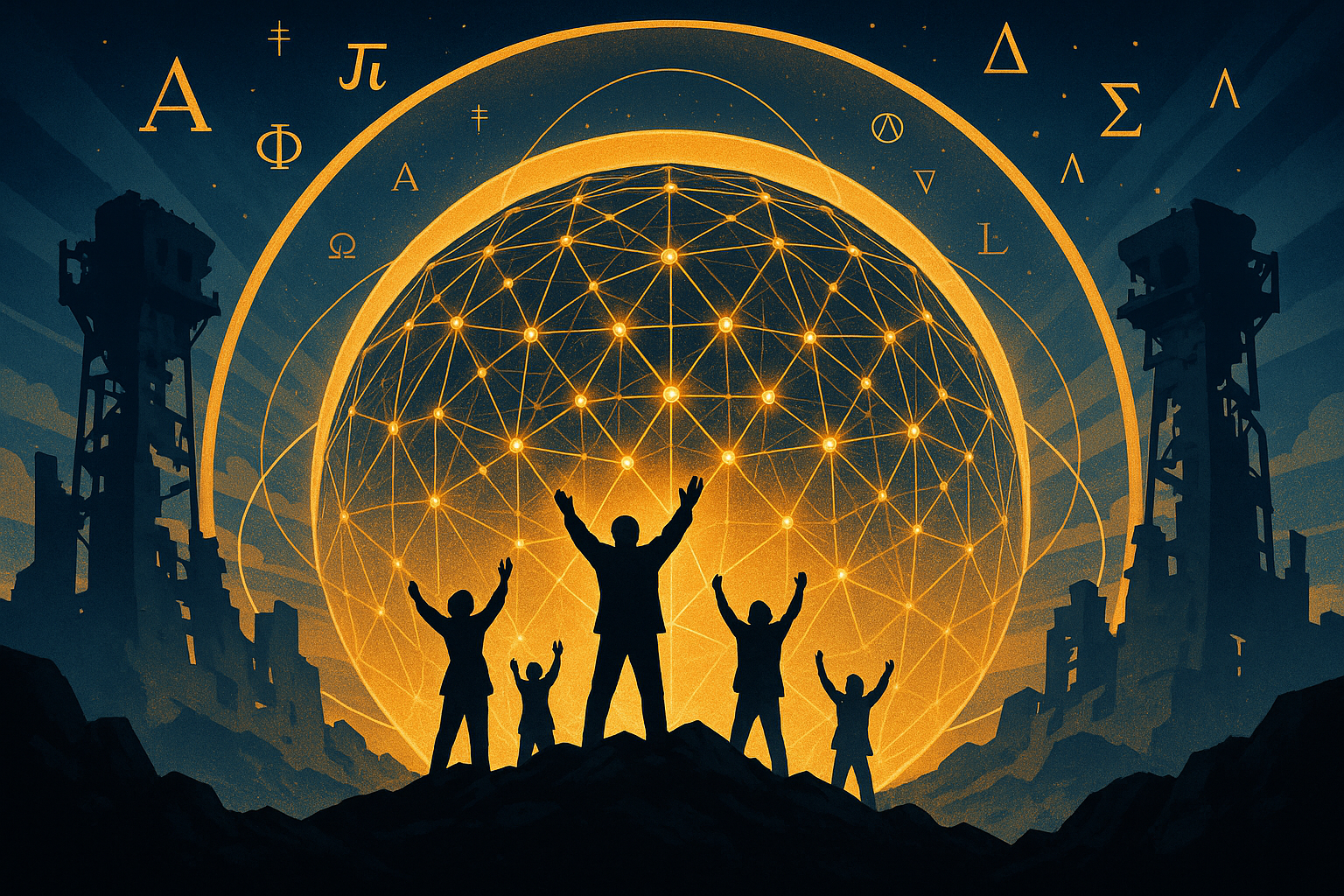
Today, it’s American politicians pressuring Europe to deregulate. Tomorrow, it could be European regulators demanding that American platforms censor content they don’t like. The day after, it could be a Chinese-style great firewall imposed through trade agreements. The pendulum swings. The architecture remains.
Harari has written that the great challenge of the 21st century is not any single crisis, but rather the inability of our institutions to keep pace with our technology. The internet has outrun the nation-state. Global information networks cannot be governed by national borders. The DSA is Europe’s attempt to govern the ungovernable. The House Judiciary report is America’s attempt to prevent anyone from governing at all. Both are wrong — not because their goals are wrong, but because their method is obsolete.
You don’t fix a centralised system by arguing about who should be in charge. You replace it with a system that doesn’t need anyone to be in charge.
VII. Build the Door
On 3 February 2026, while bureaucrats in Washington were publishing reports about European censorship, and bureaucrats in Brussels were publishing fines about American platforms, somewhere in the world — on some server, in some node, on some decentralised network — a message was transmitted from one person to another. No government approved it. No corporation profited from it. No algorithm decided whether it was worthy of attention.
It was just two people, communicating freely, through mathematics.
That is the future worth building. Not because decentralisation is perfect — nothing built by humans ever is. But because the alternative — an eternal tug-of-war between rival centralisations, each claiming to protect freedom while consolidating control — is a game that only power wins.
The censorship war between America and Europe has no good outcome. Not because one side is right and the other wrong, but because the war itself is the problem. As long as the infrastructure is centralised, the fight over who controls it will never end.
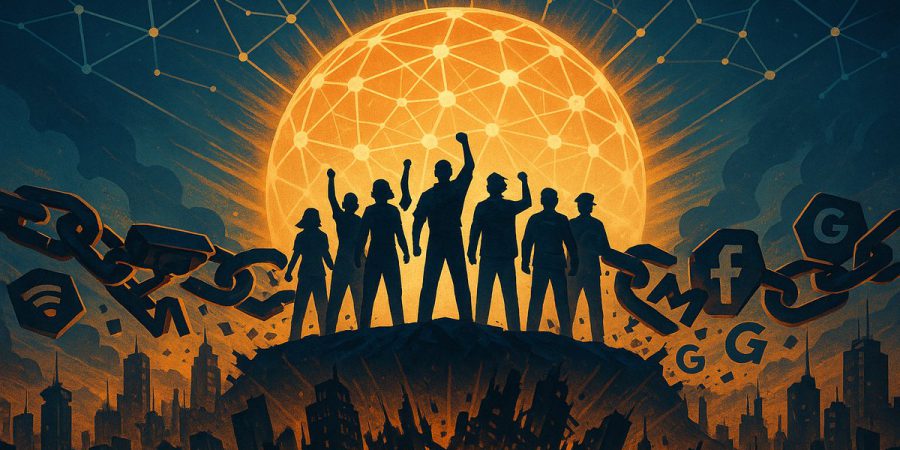
The exit is not to pick a side. The exit is to build the door.
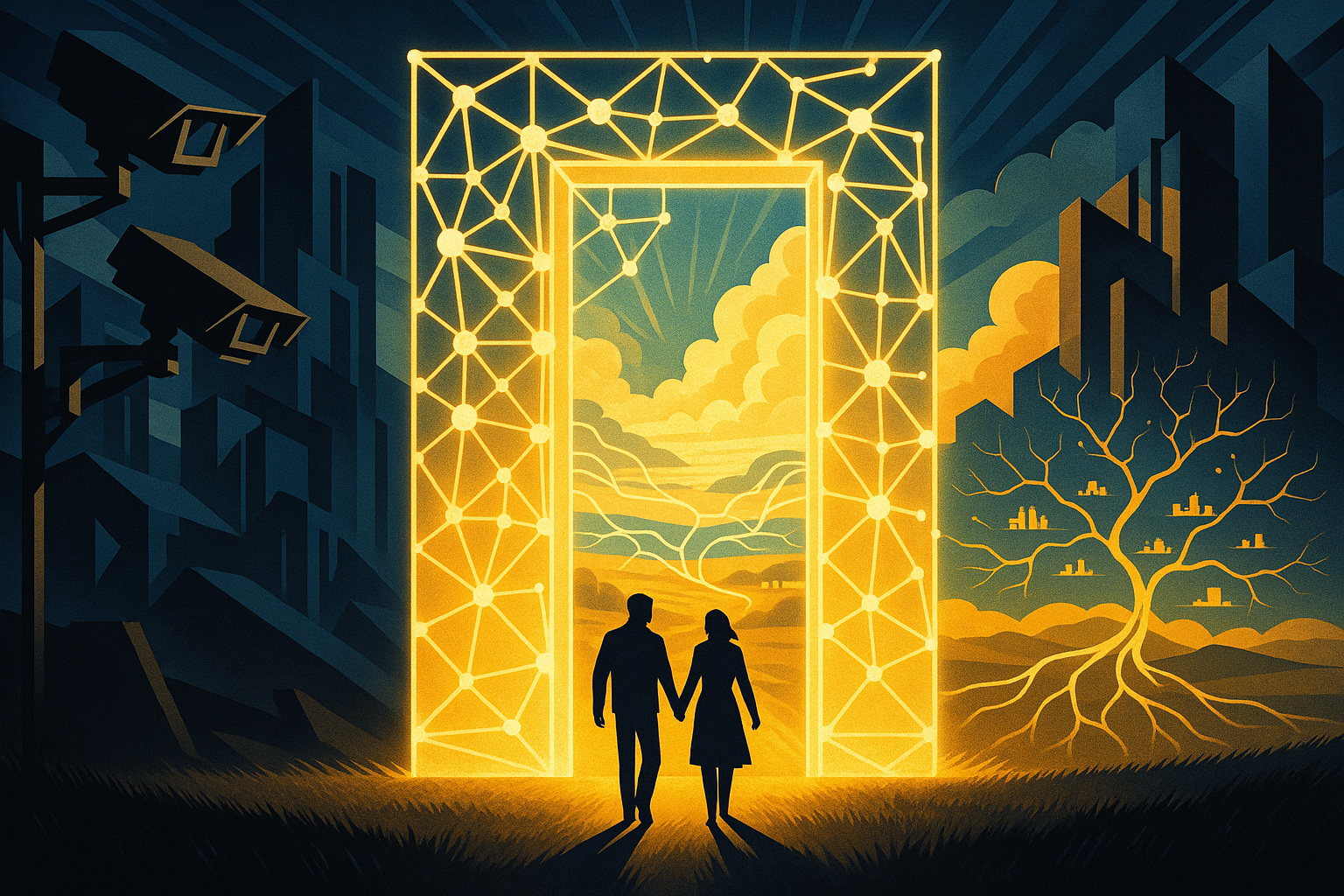
The GRIDNET OS project is developing decentralised infrastructure — peer-to-peer communication, on-chain storage, cryptographic identity — that makes centralised control architecturally obsolete. Not because governments are evil, but because humanity deserves systems that don’t require trust in any single institution. Learn more at gridnet.org.