
The 70% Life Extension Nobody Is Talking About
Two cheap drugs. One university lab. A 73% increase in remaining lifespan for elderly mice. The longevity breakthrough that should be front-page news — and why decentralized science may be the only force that can bring it to your medicine cabinet.
I. The Breakthrough: Two Old Drugs, One Extraordinary Result
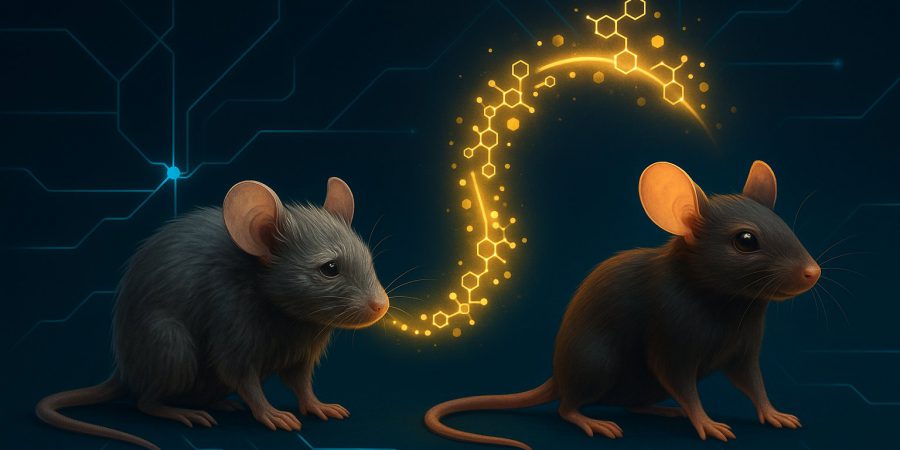
The study, titled “Sex-specific longitudinal reversal of aging in old frail mice,” was published in Aging-US (Volume 17, Issue 9) and quickly became the journal’s cover article. The experimental design was elegant in its simplicity. Take mice that are already old and frail — not the prime-of-life subjects that populate most longevity studies — and treat them with subcutaneous injections of two compounds whose individual effects on aging pathways were already well-characterized.
The first compound is oxytocin (OT), a hormone most people associate with love, bonding, and childbirth. It is already FDA-approved under the trade name Pitocin and has been used safely in clinical medicine for decades. The second is an Alk5 inhibitor (A5i), a small molecule that blocks the TGF-beta signaling receptor. Several Alk5 inhibitors are currently in Phase II clinical trials for fibrotic diseases and cancer. Neither drug is exotic. Neither is expensive. Neither requires gene therapy, stem cell transplants, or any of the billion-dollar infrastructure that typically accompanies longevity research.
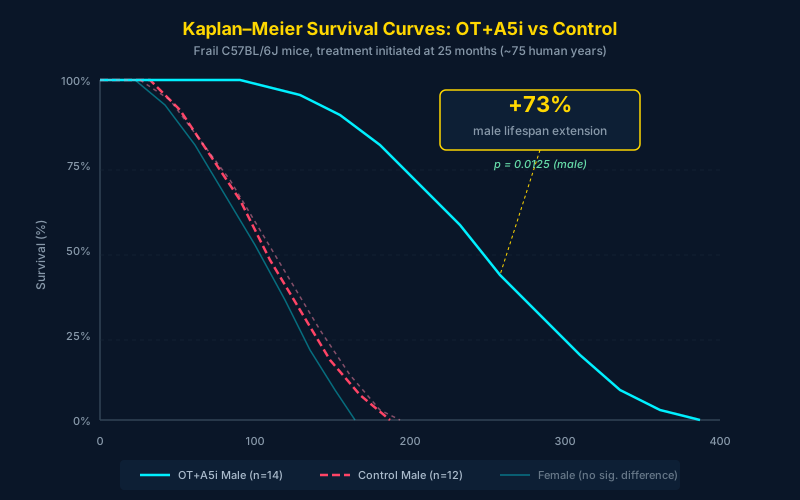
The results in male mice were, by the standards of aging research, extraordinary. Treated males lived 73% longer from the point of treatment initiation compared to controls — a difference that reached statistical significance at p = 0.0125. When measured across total lifespan, this translated to a 14% increase in overall median lifespan. Hazard ratio analysis revealed that treated males were nearly three times less likely to die at any given point than their untreated counterparts. These animals didn’t just live longer; they lived better. The treated males showed significant improvements in physical endurance, agility, and short-term memory. By standard frailty metrics, they were biologically younger than their chronological age suggested.
Why This Matters
Most longevity interventions are tested in young or middle-aged animals, where extension effects can be partly attributed to prevention rather than reversal. The Conboy lab deliberately chose the hardest possible test: animals already in the grip of advanced aging. A 73% extension from that point is not prevention — it is, functionally, a form of reversal. And both drugs already have human safety data.
II. The Biology: Why Two Pathways Are Better Than One
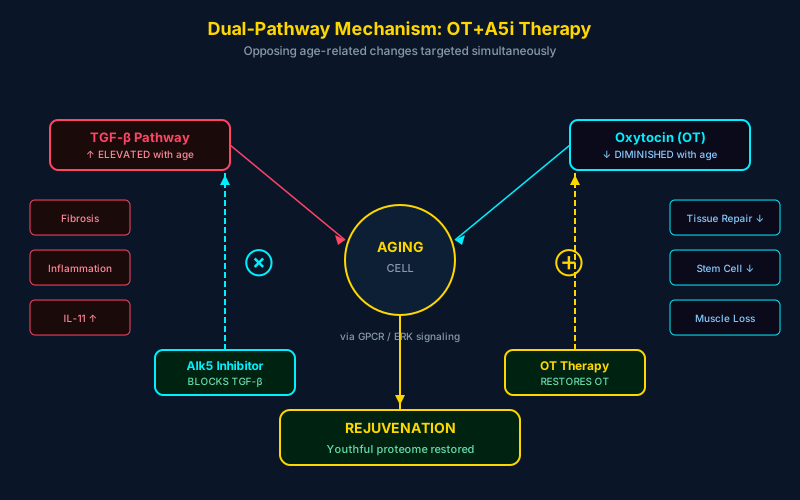
The intellectual foundation of this work rests on a deceptively simple insight that took the Conboy laboratory twenty years to fully develop: aging is not driven by the loss of a single factor, but by the simultaneous dysregulation of multiple pathways that move in opposite directions. Some signals become pathologically elevated with age. Others become deficient. Targeting only one side of this equation yields modest results. Targeting both, simultaneously, produces something qualitatively different.
The TGF-β Problem: When the Fire Alarm Won’t Stop
Transforming growth factor-beta (TGF-β) is one of the master regulators of the immune system, tissue repair, and cellular growth. In youth, it functions as a precision instrument — activating inflammation when needed, coordinating wound healing, regulating cell proliferation. But as organisms age, TGF-β signaling becomes chronically elevated. Think of it as a fire alarm that begins ringing and never stops. The alarm was useful when there was an actual fire. But when it screams continuously, the entire building starts to malfunction.
Elevated TGF-β drives a cascade of age-related pathology. It promotes fibrosis — the replacement of functional tissue with scar tissue — across virtually every organ system. It amplifies chronic, low-grade inflammation (what researchers call “inflammaging”), and it upregulates pro-inflammatory factors like interleukin-11 (IL-11), which has itself been recently identified as a major driver of aging. The Alk5 receptor is the primary gateway through which TGF-β exerts these effects. Block Alk5, and you silence a substantial portion of the age-amplified TGF-β signal.
The Oxytocin Deficit: The Hormone That Quietly Disappears
Oxytocin has long been pigeonholed as the “love hormone” or the “bonding molecule,” but its biological portfolio is far more extensive than its popular reputation suggests. The Conboy lab’s own 2014 study, published in Nature Communications, demonstrated that oxytocin is indispensable for muscle maintenance and regeneration — and that it declines significantly with age. When old mice were given oxytocin, their muscle stem cells reactivated and began repairing tissue with youthful vigor.
Oxytocin operates through G-protein-coupled receptors (GPCRs) and activates the ERK signaling cascade — a pathway critical for cell survival, proliferation, and differentiation. As oxytocin levels fall with age, so does the body’s ability to maintain and repair its own tissues. Stem cells become quiescent. Muscle wastes. Organs accumulate damage. The body’s internal maintenance crew, which once worked around the clock, begins showing up late and leaving early.
The Synergy: Bidirectional Calibration
The key insight of the OT+A5i approach is that these two interventions are not merely additive — they are synergistic. Earlier work from the Conboy lab had shown that combining the two allows for lower doses of each individual component while achieving broader rejuvenation across tissues from all three embryonic germ layers: brain (ectodermal), liver (endodermal), and muscle (mesodermal). The dual approach corrects what the researchers call “bidirectional age-related pathway dysregulation.” One arm pushes down what has been elevated. The other lifts up what has been depressed. The system rebalances.
“Important studies report acute rejuvenation of mammalian cells and tissues by blood heterochronicity, old plasma dilution, defined factors, and partial reprogramming. And extension of rodent lifespan via single-prong methods was tried in recent years. Here, we examined whether simultaneous calibration of pathways that change with aging in opposite directions would be more effective in increasing healthspan and lifespan.”— Kato et al., Aging-US, August 2025
III. The Protocol: Elegance in Simplicity
The experimental design reflects the lab’s characteristic preference for clinical translatability. Old C57BL/6J mice (24–26 months, equivalent to approximately 75 human years) were assigned to treatment and control groups. The treated animals received subcutaneous injections of the combined OT+A5i formulation in repeating four-week cycles: two weeks of active treatment followed by two weeks of comprehensive health testing. This cycle continued for the duration of each animal’s natural lifespan.
The health assessments were comprehensive. Physical endurance was measured through treadmill and rotarod testing. Cognitive function was evaluated via short-term memory assays. Frailty was quantified using a novel statistical model that tracked the progressive accumulation of age-related deficits over time. And crucially, blood serum was collected and analyzed using bio-orthogonal metabolic proteomics — a technique that allowed the researchers to create a comprehensive portrait of the circulating protein landscape and track how treatment altered it over time.
The control group received HBSS (Hanks’ Balanced Salt Solution) — the standard vehicle control for subcutaneous injections. Both groups were housed under identical conditions and monitored until natural death. No animals were sacrificed for the lifespan analysis; all data points represent complete, natural survival curves.
IV. The Molecular Evidence: Silencing the Noise of Aging
Perhaps the most revealing finding of the study was not the survival curves themselves, but what was happening in the blood. Using bio-orthogonal metabolic proteomics — a technique that labels newly synthesized proteins with non-natural amino acid analogs, allowing researchers to distinguish fresh protein production from the accumulated detritus of aging — the team mapped the systemic signaling landscape of treated and untreated mice.
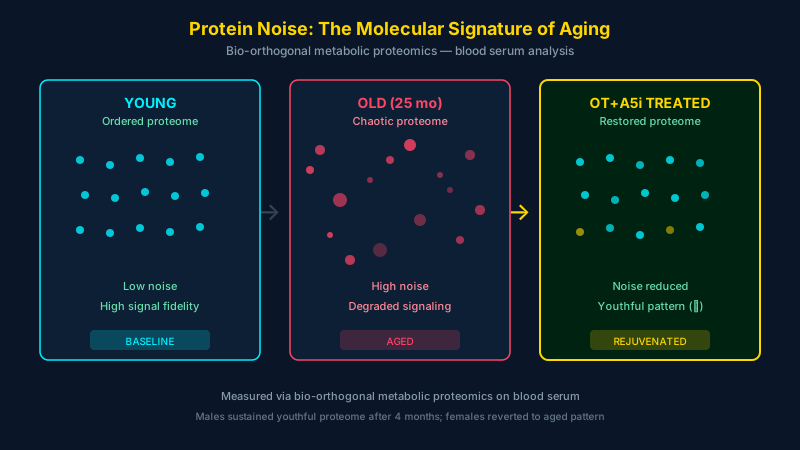
The concept at the center of this analysis is protein noise — the degree of disorder and variability in the circulating proteome. In young organisms, blood proteins are expressed in tightly regulated, well-defined patterns. Information flows clearly between cells, tissues, and organs. As an organism ages, this precision degrades. Protein expression becomes increasingly stochastic — noisy, scattered, dysregulated. The body’s internal communication system, which once operated with the clarity of fiber optic cable, degrades to the reliability of tin cans and string.
This is not merely a cosmetic metric. Protein noise is an established biomarker of biological aging, and its increase correlates with functional decline across virtually every organ system. Reducing protein noise means restoring the fidelity of intercellular communication — in effect, giving the body’s cells a clearer set of instructions for how to maintain themselves.
The OT+A5i treatment produced dramatic results. After just seven days of treatment, both male and female mice showed youthful restoration of systemic signaling determinants and significant reduction in protein noise. The body’s proteomic signature shifted toward a younger configuration. But here is where the story takes its most intriguing turn: after four months of continuous treatment, only male mice maintained this rejuvenated proteomic profile. Female mice, despite showing the same initial response, reverted to their aged protein landscape.
V. The Sex Divide: Biology’s Most Inconvenient Variable
The most provocative finding of the study is not the 73% extension itself — it is the complete absence of that extension in female mice. Same drug. Same dose. Same protocol. Same age. Dramatically different outcomes. Treated males lived 73% longer than controls. Treated females showed no statistically significant lifespan benefit whatsoever (p = 0.19) — indeed, they showed a non-significant trend toward shorter survival (115.3 vs 144.7 days average), though the small sample sizes preclude definitive conclusions.
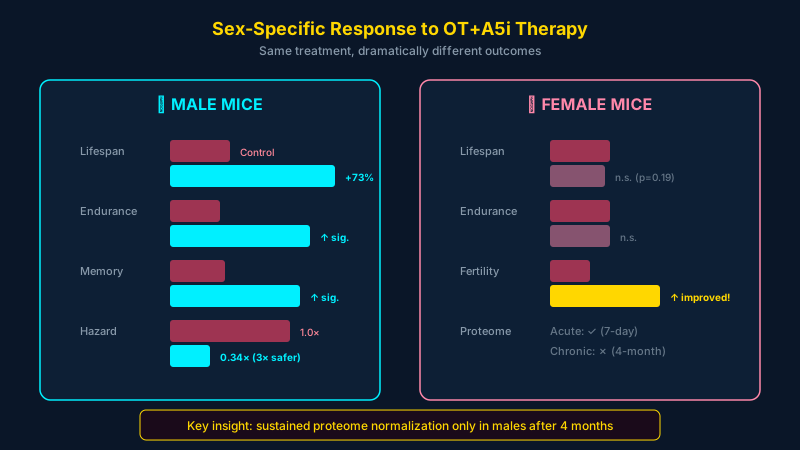
This is not a failure of the study — it is one of its most important contributions. The finding throws a spotlight on a problem that the longevity field has been slow to confront: aging is fundamentally sex-specific. Males and females do not age the same way, and interventions that work in one sex may be ineffective or even harmful in the other. The implicit assumption that a single longevity therapy will work equally well in both sexes is almost certainly wrong.
The proteomic data provides a mechanistic clue. Both sexes showed acute proteome rejuvenation after seven days of treatment, suggesting that the initial molecular response to OT+A5i is indeed sex-independent. But after four months of chronic treatment, only male mice maintained the youthful proteomic configuration. Something in the female biology — hormonal, epigenetic, immunological, or some combination thereof — actively resisted or reversed the therapeutic effect over time.
A Silver Lining: Fertility Restoration
Intriguingly, while OT+A5i did not extend lifespan in female mice, it did produce one notable benefit: improved fertility in middle-aged females. This suggests that the therapy does engage relevant biological pathways in females, but that the downstream effects manifest differently. The reproductive system and the aging-longevity axis may be more tightly coupled in females, channeling the therapeutic benefit toward reproductive capacity rather than systemic rejuvenation.
This finding has implications far beyond mouse biology. In an era where reproductive timelines are extending in human populations, and where organizations like AthenaDAO are specifically funding research into ovarian longevity and reproductive healthspan, the female fertility effect of OT+A5i may be as commercially and socially significant as the male lifespan extension — just in a different domain.
The Hard Question
If a longevity therapy works spectacularly in one sex and not at all in the other, should it be pursued? The answer, of course, is yes — but with clear-eyed acknowledgment that we may need fundamentally different therapeutic strategies for male and female aging. The era of one-size-fits-all longevity medicine may be ending before it ever truly began.
VI. The Billion-Dollar Contrast: How OT+A5i Compares to the Competition
To appreciate the significance of the Conboy lab’s results, one must view them against the broader landscape of longevity interventions — a landscape that is, increasingly, dominated by staggering investments producing comparatively modest returns.
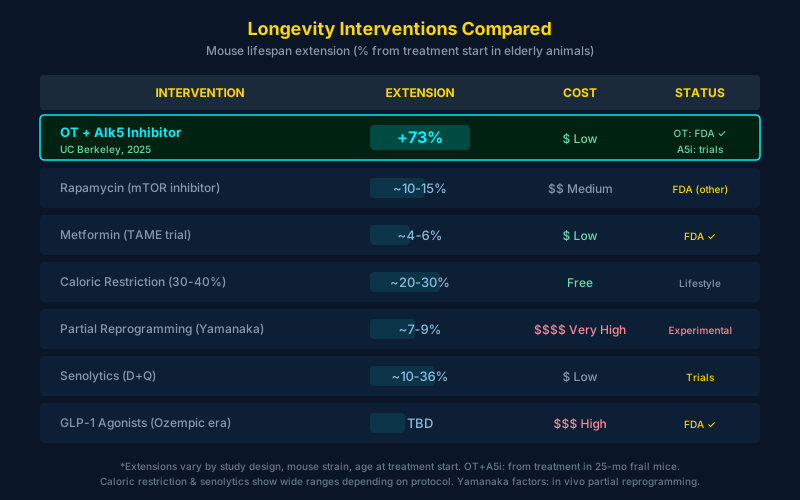
Rapamycin, the mTOR inhibitor, has been the darling of the longevity field for over a decade. A 2025 meta-analysis across 167 studies confirmed that rapamycin extends lifespan in vertebrates comparably to dietary restriction — typically 10–15% in mice, depending on dose and timing. It is a real effect, but it comes with immune suppression side effects, and the magnitude pales beside OT+A5i’s results.
Metformin, the diabetes drug that launched the TAME (Targeting Aging with Metformin) trial — one of the first FDA-accepted studies treating aging as a condition — shows even more modest effects. The same 2025 meta-analysis found that metformin does not consistently extend lifespan in vertebrates, despite widespread enthusiasm. Estimated extensions hover around 4–6% in favorable studies.
Caloric restriction remains the gold standard, consistently producing 20–30% lifespan extension in rodents. But its translation to humans faces an obvious obstacle: sustained caloric restriction is profoundly unpleasant for most people, and compliance in real-world conditions is abysmal.
Partial cellular reprogramming using Yamanaka factors (the approach pioneered by Altos Labs with $3 billion in funding from Jeff Bezos and Yuri Milner) has produced roughly 7–9% lifespan extension in mice — at a cost-per-insight that would make defense contractors blush. The technology requires genetic engineering or viral vector delivery, carries cancer risks, and remains years from any conceivable human application.
Senolytics (drugs that clear senescent cells, like the dasatinib + quercetin combination) have shown lifespan extensions ranging from 10–36% in various mouse models. They represent perhaps the most promising comparison to OT+A5i, though the variable results across studies and the aggressive chemotherapeutic origin of dasatinib complicate the clinical picture.
And then there is the GLP-1 agonist revolution — Ozempic, Wegovy, Mounjaro — which has captivated both the pharmaceutical industry and the public imagination. While GLP-1 drugs show remarkable metabolic benefits and potential longevity effects, they cost $1,000+ per month, are under global supply constraints, and their long-term lifespan effects remain entirely unknown. They are, at present, a $100+ billion bet on a hypothesis.
VII. Twenty Years in the Making: From Vampire Mice to a Pill
The OT+A5i result did not appear from nowhere. It is the culmination of two decades of painstaking research that began with one of biology’s most provocative experiments: parabiosis.
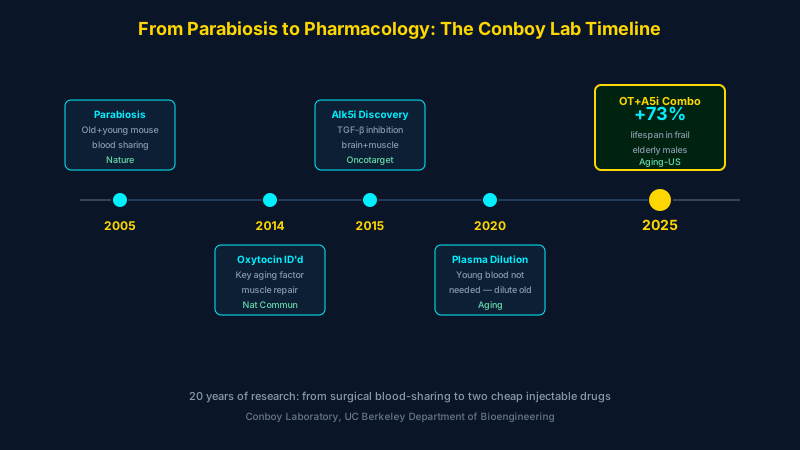
In 2005, Irina Conboy and her colleagues published groundbreaking work in Nature demonstrating that when the circulatory systems of young and old mice were surgically connected — a technique called heterochronic parabiosis — the old mice showed dramatic rejuvenation of multiple tissues. Muscle stem cells reactivated. Brain progenitor cells proliferated. Liver regeneration improved. The old mouse, drinking from the fountain of young blood, became biologically younger.
The finding electrified the field and launched a thousand vampire jokes. But the Conboy lab was interested in a more fundamental question: what, specifically, in young blood was doing this? And, perhaps more importantly, was it actually something beneficial in young blood, or something harmful in old blood that was being diluted?
The answer, which took another fifteen years to fully elucidate, was: both. In 2014, the lab identified oxytocin as a key circulating factor that declines with age and is necessary for muscle regeneration (Nature Communications). In 2015, they showed that systemic administration of an Alk5 inhibitor could simultaneously rejuvenate brain and muscle tissue in old mice (Oncotarget). And in 2020, in a study that should have rewritten the popular narrative about “young blood,” they demonstrated that simply diluting old blood plasma — without adding any young blood at all — produced rejuvenation comparable to parabiosis (Aging).
The dilution finding was a paradigm shift. It suggested that aging is driven less by the absence of youthful factors than by the accumulation of harmful ones. The old blood was toxic. Dilute the toxins, and the body’s intrinsic repair mechanisms — many of which are still functional in old age but suppressed by the poisoned signaling environment — reawaken.
OT+A5i is the pharmacological distillation of this insight. Rather than surgically connecting two mice, or performing plasma exchanges, or filtering blood: simply inject two cheap drugs that correct the two most consequential signaling imbalances that occur with aging. Push down TGF-β. Lift up oxytocin. Let the body do the rest.
VIII. The DeSci Imperative: Why Decentralized Science Must Carry This Forward
Here is the uncomfortable truth about the OT+A5i breakthrough: the traditional pharmaceutical industry has almost no incentive to develop it.
Both compounds are off-patent or soon will be. Oxytocin has been a generic drug for decades. Alk5 inhibitors, while still in clinical trials for their primary indications, target a well-characterized pathway that cannot be meaningfully monopolized. There is no blockbuster patent to be had. No $100-per-month subscription model. No moat. For an industry that requires multi-billion-dollar returns to justify multi-billion-dollar clinical trial investments, OT+A5i is economically uninteresting — even if it works in humans.
This is the structural failure at the heart of modern biomedicine. The incentive system that funds drug development is optimized for novelty and patent exclusivity, not for therapeutic impact. A cheap combination of existing drugs that could extend healthy human lifespan by years or decades is, from a pharma business model perspective, a problem rather than an opportunity.
Enter DeSci
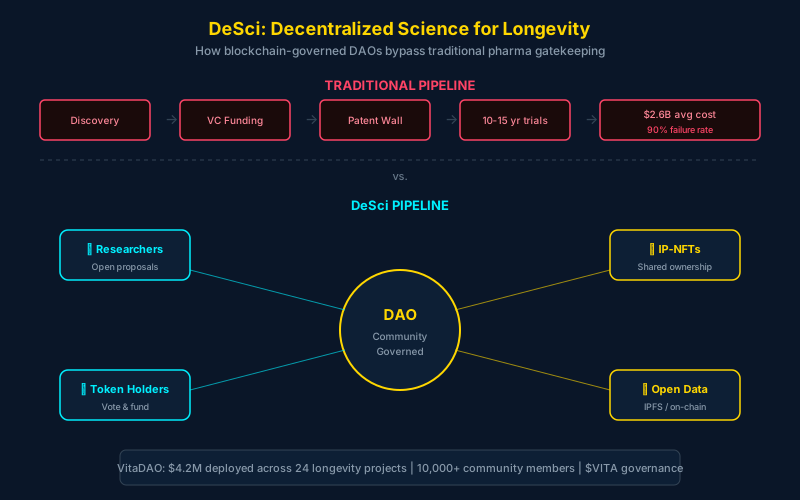
Decentralized science (DeSci) represents the most promising structural alternative to emerge in a generation. At its core, DeSci applies blockchain-based governance, tokenized funding, and open-access principles to the scientific research enterprise. Rather than relying on venture capital firms and pharmaceutical corporations to decide which research gets funded, DeSci allows communities of stakeholders — patients, researchers, citizens, investors — to fund, govern, and benefit from research collectively.
VitaDAO is the exemplar. This decentralized autonomous organization has deployed over $4.2 million across 24 longevity research projects since 2021, governed by a community of more than 10,000 $VITA token holders. Research outputs are fractionalized through IP-NFTs (intellectual property non-fungible tokens), allowing shared ownership of discoveries and creating a financial model where the community that funds the research also benefits from its commercialization.
A 2024 paper published in PMC/NIH titled “Advancing longevity research through decentralized science” laid out the case explicitly: centralized institutions have been linked to a deceleration of progress, which is acutely felt in longevity science — a field where aging is the number-one risk factor for most diseases but receives a fraction of the funding allocated to individual disease categories. DeSci proposes a model where DAOs facilitate community-driven funding, specifically promoting high-risk, high-reward research that traditional funders avoid.
The UC Berkeley DeSci connection is not coincidental. The California Management Review (published by UC Berkeley’s Haas School of Business) published a major analysis in November 2025 examining whether decentralized science can become “the next frontier of scientific research” — concluding that tokenized IP, decentralized data storage (IPFS), and DAO governance represent a viable alternative to the traditional grant-and-patent system.
What DeSci Could Do for OT+A5i
Fund independent replication — The single most urgent need is for other labs to reproduce the Conboy results. A DeSci-funded replication network could coordinate parallel studies across multiple institutions, strains, and conditions within 12–18 months. Bypass patent incentives — Since the compounds are generic, traditional pharma won’t fund human trials. DeSci funding models don’t require patent monopolies; they generate returns through IP-NFTs and community benefit. Open the data — All proteomics data, survival curves, and methodology could be published on-chain with verifiable provenance, enabling any researcher worldwide to build on the results. Accelerate translation — With both drugs already having human safety data, a DeSci-funded human pilot study could potentially begin within 2–3 years.
IX. GRIDNET OS: The Infrastructure Layer for Open Longevity Science
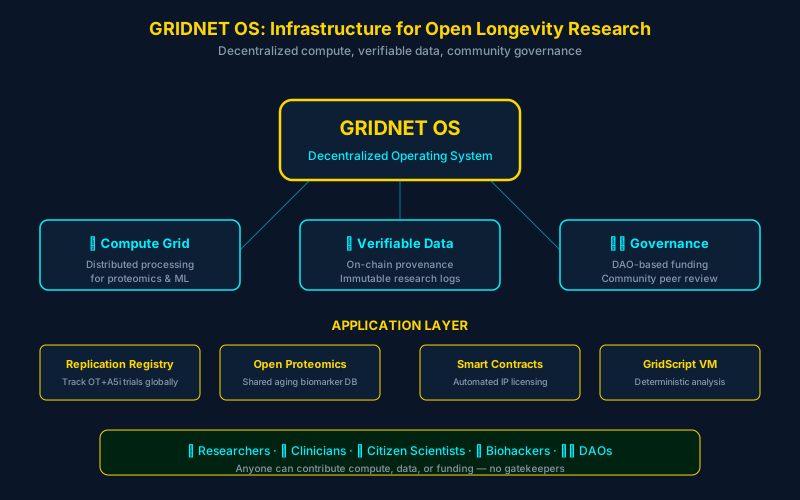
If DeSci provides the governance and funding model for open longevity research, GRIDNET OS provides the infrastructure. As a decentralized operating system designed for trustless computation, verifiable data provenance, and community-governed application deployment, GRIDNET OS is uniquely positioned to serve as the backbone for the kind of open, distributed research ecosystem that breakthroughs like OT+A5i demand.
Distributed Compute for Proteomics
The bio-orthogonal metabolic proteomics used in the Conboy study generates massive datasets — thousands of protein signatures across multiple time points, conditions, and individual animals. Analyzing these datasets, particularly when combined with machine learning approaches for aging-clock construction, requires significant computational resources. GRIDNET OS’s distributed compute grid allows researchers to submit proteomics workloads that are executed across a decentralized network of nodes, with cryptographic verification ensuring that results are reproducible and tamper-proof.
Verifiable Research Provenance
One of the persistent challenges in aging research is the replication crisis. Studies that produce dramatic results in one lab frequently fail to replicate in others, and the reasons — subtle differences in protocol, unreported variables, p-hacking, or outright fraud — are often impossible to disentangle after the fact. GRIDNET OS’s on-chain data provenance system creates an immutable record of every step in the research process: raw data uploads, analysis parameters, statistical methods, and results. Every claim is auditable. Every dataset is permanent.
GridScript: Deterministic Analysis
GRIDNET OS’s native virtual machine, GridScript VM, executes code deterministically across all nodes — meaning that any analysis written in GridScript will produce identical results regardless of where or when it is run. For longevity research, this means that aging biomarker calculations, survival curve analyses, and proteomics processing pipelines can be published as verifiable, reproducible programs that any researcher can audit and re-execute. No more “we used a custom R script” with no further details. The analysis is the publication.
DAO-Governed Research Funding
GRIDNET OS’s smart contract infrastructure enables the creation of research-funding DAOs that can operate with complete transparency. Token holders vote on which projects to fund, milestone payments are triggered automatically by verified deliverables, and IP rights are encoded in smart contracts that ensure fair distribution of any resulting value. A GRIDNET-based longevity DAO could fund OT+A5i replication studies, with researchers submitting proposals that the community evaluates and funds directly — no grant committee bureaucracy, no institutional overhead, no Big Pharma veto.
// Conceptual GridScript: Longevity Research DAO Funding Contract
contract LongevityReplicationFund {
    mapping(address => uint256) public contributions;
    mapping(uint256 => Proposal) public proposals;
    uint256 public totalFunding;

    struct Proposal {
        address researcher;
        string protocolIPFS;   // IPFS hash of replication protocol
        uint256 requested;
        uint256 votes;
        bool funded;
        bool milestoneVerified;
    }

    function fundProposal(uint256 proposalId) external {
        require(proposals[proposalId].votes > quorum);
        require(!proposals[proposalId].funded);
        // Release funds upon community vote threshold
        transfer(proposals[proposalId].researcher,
                 proposals[proposalId].requested);
        proposals[proposalId].funded = true;
    }

    function verifyMilestone(uint256 proposalId,
                             bytes32 dataHash) external {
        // On-chain verification of research deliverable
        require(verifyProvenance(dataHash));
        proposals[proposalId].milestoneVerified = true;
    }
}
This is not theoretical. The architecture exists. The question is whether the longevity research community will use it — or continue to wait for permission from institutions whose incentive structures are fundamentally misaligned with the goal of extending healthy human life.
X. What Comes Next: The Road to Human Translation
The gap between a spectacular mouse result and a functioning human therapy is wide, littered with the wreckage of promising interventions that failed to translate. The history of aging research is, in many ways, a history of mouse studies that didn’t survive first contact with human biology. The reasons for cautious optimism about OT+A5i are specific and substantial, but so are the obstacles.
Reasons for Optimism
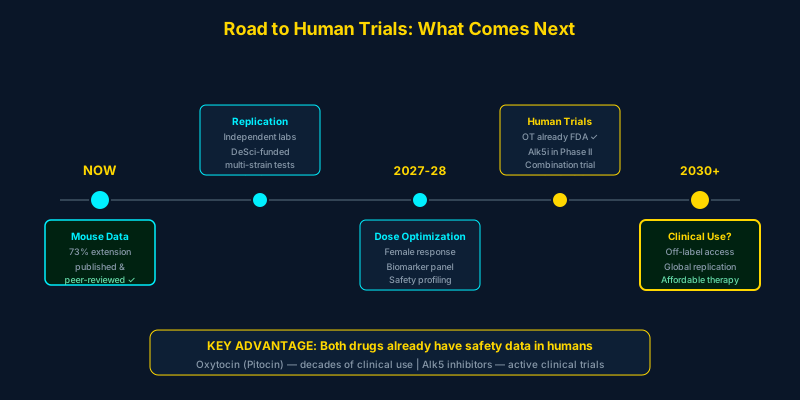
Existing safety data. This is the single most important factor distinguishing OT+A5i from most longevity candidates. Oxytocin is FDA-approved and has been administered to millions of humans over decades. Its safety profile is extensively characterized. Alk5 inhibitors are currently in Phase II clinical trials, meaning they have already passed Phase I safety assessments in humans. The combination has not been tested in humans, but the individual components have — dramatically reducing the regulatory and safety barriers to a combination trial.
Mechanistic clarity. The Conboy lab has not merely shown an empirical result; they have provided a mechanistic explanation grounded in twenty years of pathway analysis. The TGF-β elevation and oxytocin decline are well-documented features of human aging. The pathways are conserved across mammals. The proteomic evidence shows a specific, measurable mechanism of action (noise reduction, signaling restoration) rather than a vague “something happened.”
Clinical simplicity. Subcutaneous injection. Two weeks on, two weeks off. No gene therapy. No viral vectors. No cell transplants. No exotic delivery systems. If this works in humans, it could be administered in any doctor’s office on the planet.
Reasons for Caution
The mouse-to-human gap. Mice are not humans, and the history of aging interventions that worked in mice but failed in humans is long. The C57BL/6J strain used in this study is highly inbred, and results may not even translate to other mouse strains, let alone to genetically diverse human populations.
The sex-specificity problem. A therapy that works only in males is, at best, a half-solution. Understanding why females don’t respond — and developing a modified approach that addresses female aging biology — is essential for broad clinical relevance. This will require substantial additional research.
Sample size. The study used 14 treated and 12 control male mice. While the statistical significance is robust (p = 0.0125), the sample size is modest by pharmaceutical trial standards. Replication in larger cohorts is essential.
Dosing and duration. The optimal dose, frequency, and duration of OT+A5i treatment in humans are entirely unknown. Mouse pharmacokinetics do not translate directly to humans, and the therapeutic window may be narrow.
The Path Forward
The immediate priority is independent replication. Multiple labs, multiple mouse strains, larger sample sizes. This is precisely the kind of work that DeSci infrastructure is designed to coordinate and fund. A VitaDAO-funded replication initiative, with data published on GRIDNET OS’s verifiable provenance layer, could produce definitive multi-site confirmation within 18–24 months.
In parallel, dose-response studies and female-specific investigations should begin immediately. Why do females lose the therapeutic benefit after four months? Is it hormonal? Epigenetic? Immunological? Can the protocol be modified — different dosing, additional compounds, timing adjustments — to achieve sustained benefit in both sexes?
If replication succeeds and the mechanism holds, human pilot studies could begin within 3–5 years, leveraging the existing safety data for both compounds to accelerate the regulatory pathway. Given that both drugs are already available (one FDA-approved, the other in clinical trials), the path from successful replication to first-in-human trial could be substantially shorter than the typical 10–15-year drug development timeline.
The Bottom Line
We are looking at a potential inflection point in the history of human longevity. Not because a single mouse study proves anything definitive — it doesn’t — but because the combination of a dramatic effect size, a clear mechanistic explanation, twenty years of foundational research, and two clinically accessible drugs creates a uniquely promising starting point. The question is no longer whether we have a plausible path to significant human lifespan extension. The question is whether our institutions — scientific, regulatory, financial — are capable of pursuing it with the urgency it deserves. If they aren’t, the decentralized alternatives are already being built.
References & Sources
- Kato, C., Zheng, J., Quang, C., Siopack, S., Cruz, J., Robinson, Z.R., Fong, N., Zhang, Z.A., Young, P., Conboy, M.J., & Conboy, I.M. (2025). “Sex-specific longitudinal reversal of aging in old frail mice.” Aging (Albany NY), 17(9). DOI: 10.18632/aging.206304 | PubMed: 40848270
- Elabd, C., Cousin, W., Upadhyayula, P., Chen, R.Y., Chooljian, M.S., Li, J., Kung, S., Jiang, K.P., & Conboy, I.M. (2014). “Oxytocin is an age-specific circulating hormone that is necessary for muscle maintenance and regeneration.” Nature Communications, 5, 4082. DOI: 10.1038/ncomms5082
- Yousef, H., Conboy, M.J., Morber, A., Quang, C., & Conboy, I.M. (2015). “Systemic attenuation of the TGF-β pathway by a single drug simultaneously rejuvenates hippocampal neurogenesis and myogenesis in the same old mammal.” Oncotarget, 6(14), 11959–11978. PubMed: 26003168
- Mehdipour, M., Skinner, C., Wong, N., Liber, M., Yerber, C., Huang, G., Conboy, M.J., & Conboy, I.M. (2020). “Rejuvenation of three germ layers tissues by exchanging old blood plasma with saline-albumin.” Aging (Albany NY), 12(10), 8790–8819. DOI: 10.18632/aging.103418
- Conboy, I.M., Conboy, M.J., Wagers, A.J., Girma, E.R., Weissman, I.L., & Rando, T.A. (2005). “Rejuvenation of aged progenitor cells by exposure to a young systemic environment.” Nature, 433(7027), 760–764. DOI: 10.1038/nature03260
- Ageing Research Reviews (2025). “Rapamycin, Not Metformin, Mirrors Dietary Restriction-Driven Lifespan Extension in Vertebrates: A Meta-Analysis.” Aging Cell. DOI: 10.1111/acel.70131 | PubMed: 40532901
- Aging-US Editorial (2025). “Sex-Specific Effects Found in New Anti-Aging Therapy for Elderly Mice.” Aging-US News Room. aging-us.com
- Kato, C. et al. (2025). “Correction for: Sex-specific longitudinal reversal of aging in old frail mice.” Aging (Albany NY), 17(11), 2875. DOI: 10.18632/aging.206345 | PubMed: 41348538
- Korotko, U., Chwalek, A., & Witkowski, J.M. (2024). “Advancing longevity research through decentralized science.” PMC/NIH. PMC11317406
- UC Berkeley Research Profile: Irina Conboy. vcresearch.berkeley.edu
- The Conboy Laboratory, UC Berkeley Department of Bioengineering. conboylab.berkeley.edu
- Drori, I. & Cattani, G. (2025). “Can Decentralized Science Be the Next Frontier of Scientific Research?” California Management Review, UC Berkeley Haas School of Business. cmr.berkeley.edu
- VitaDAO — The Longevity DAO. vitadao.com
- Full text available via UC Berkeley eScholarship: escholarship.org